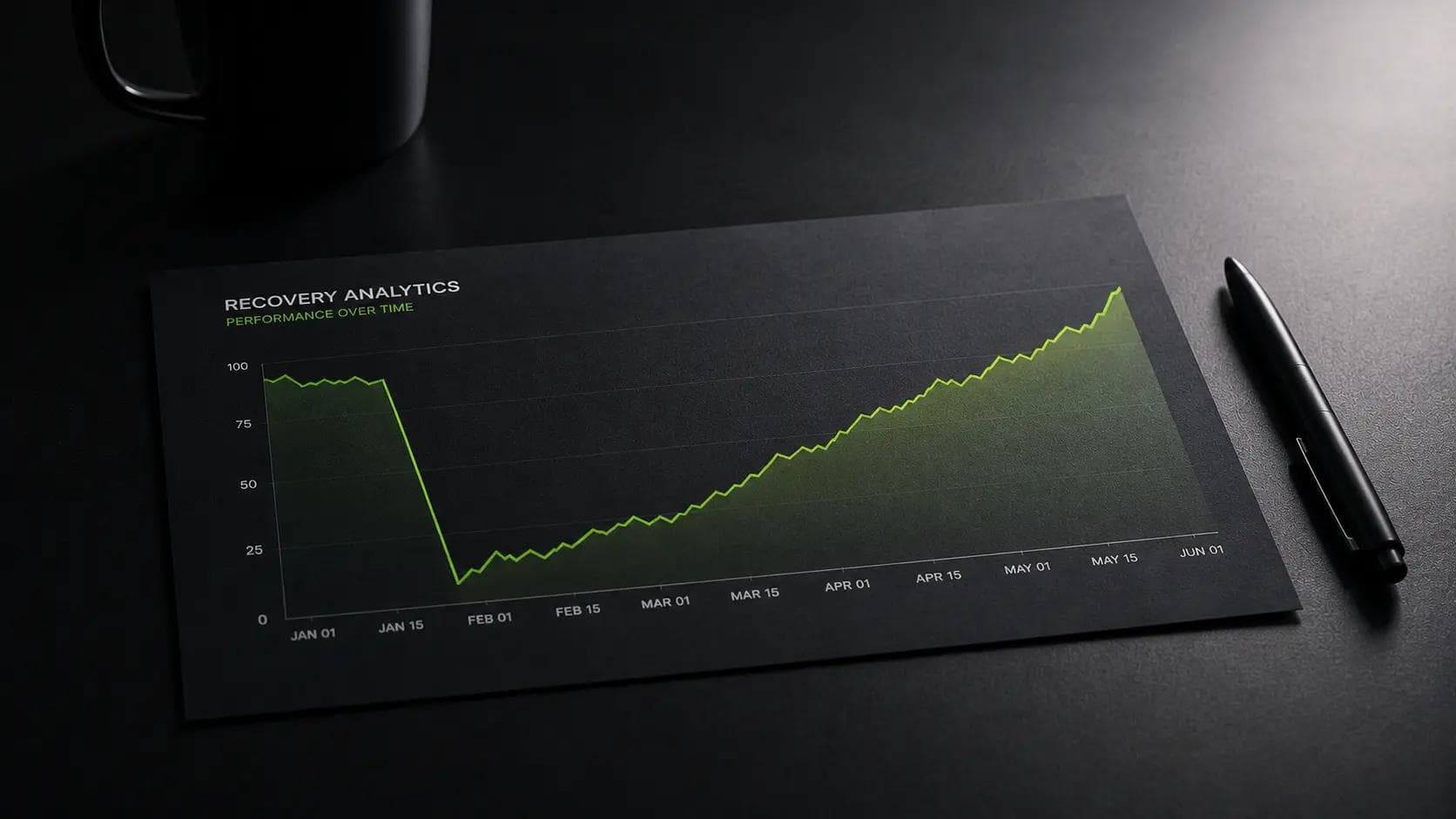

Your Traffic Dropped. Here's What That Actually Means.
If you're reading this, you've probably experienced the sinking feeling of opening Google Search Console on a Monday morning to find your organic traffic has cratered — sometimes by 30%, sometimes by 70%, sometimes almost overnight.
First, take a breath. A Core Update hit is not a permanent penalty. It's a signal — a very loud signal that Google's evaluation of your site's relevance, authority, and user experience has shifted relative to your competitors.
The good news: signals can be understood. Systems can be fixed. Rankings can be recovered.
At Safi Dot Tech, SEO recovery is one of our most requested services — and it's one where the difference between guessing and systematic auditing is measured in the thousands of dollars of recovered revenue per month.
""Most sites don't lose rankings because Google hates them. They lose rankings because Google found something it trusts more. Your job is to become that something."
Step 1: Stop Panicking and Start Diagnosing
The worst thing you can do immediately after a Core Update hit is make sweeping, reactive changes. Google's systems need time to re-crawl and re-index your site. Panic edits create noise that makes the underlying signal harder to read.
Instead, spend the first 72 hours collecting data:
Data Sources to Pull Immediately
- Google Search Console → Performance tab, filter by date range, compare 90 days pre-update vs. 90 days post-update. Identify which queries and pages took the hardest hits.
- GA4 / Analytics → Confirm the drop is organic, not a tracking issue or a change in paid spend.
- Semrush or Ahrefs → Pull your ranking position history for top 50 keywords. Identify the exact date the shift started.
- Wayback Machine / BuiltWith → Check what your top-ranking competitors changed around the same timeframe.
A pattern will emerge. Rarely is a Core Update hit random — it's almost always concentrated in specific content verticals, page types, or query intent categories.
Step 2: The Technical SEO Audit — Layer by Layer
Once you understand where you lost ground, the technical audit tells you why. This is where most DIY recovery efforts fail — they focus on content tweaks while ignoring the infrastructure signals Google weighs heavily.
Crawlability and Indexation
- Run a full site crawl with Screaming Frog or Sitebulb. Identify orphaned pages, redirect chains longer than 2 hops, and canonicalization conflicts.
- Check your
robots.txtand ensure no critical pages are accidentally blocked. - Audit your XML sitemap — it should contain only canonical, indexable URLs that return a 200 status.
Core Web Vitals Health Check
Google's page experience signals are a ranking factor — not a suggestion. Pull your CWV data from Search Console's Core Web Vitals report and identify pages with "Poor" or "Needs Improvement" status:
- LCP (Largest Contentful Paint): Should be under 2.5 seconds. Common culprits are unoptimized hero images and render-blocking scripts.
- INP (Interaction to Next Paint): Replaced FID in 2024. Measures responsiveness; target under 200ms.
- CLS (Cumulative Layout Shift): Should be under 0.1. Often caused by images without explicit dimensions or late-loading ads.
Structured Data and E-E-A-T Signals
Google's Helpful Content system and E-E-A-T (Experience, Expertise, Authoritativeness, Trustworthiness) framework weight content quality signals that go beyond keywords:
- Are your authors identified and credentialed?
- Do your articles cite primary sources?
- Is your "About" page robust and your contact information verifiable?
- Do you have genuine backlinks from authoritative domains in your vertical?
These aren't soft signals anymore. They are ranking factors with measurable impact, particularly in YMYL (Your Money or Your Life) verticals.
Step 3: Content Quality Audit — The Hard Conversation
Here's the truth most SEO agencies avoid telling you: sometimes the Core Update hit is correct.
Google's systems are imperfect, but they've become remarkably good at distinguishing content written for searchers from content written for search engines. If your content library includes:
- Thin pages under 400 words targeting single keywords with no genuine depth
- Programmatically generated content with low editorial oversight
- Articles that technically answer a query but leave users with follow-up questions
- Duplicate or near-duplicate content across multiple URLs
...then the update may have correctly downgraded your authority signal.
The Content Pruning Framework
- Keep and improve: Pages with genuine search impressions, some clicks, and content that can be meaningfully deepened.
- Consolidate: Multiple thin pages covering the same topic. Merge them into a single authoritative resource with a 301 redirect from the old URLs.
- Remove and redirect: Pages with zero impressions over 12 months and no strategic purpose. Deindex or redirect to a relevant parent page.
- Rebuild from scratch: High-priority target pages that are fundamentally misaligned with search intent.
Step 4: Sustainable Link Building — White-Hat Only
If your backlink profile shows signs of manipulative link building — paid links, link exchanges, private blog network (PBN) links — a Core Update hit can be Google catching up to practices that violated guidelines even when they were working.
The recovery path here requires:
- A full backlink audit via Google Search Console's link report, Ahrefs, or Majestic
- Disavow file submission for demonstrably manipulative links
- A forward-looking white-hat link acquisition strategy
White-hat link building in 2026 is not passive. It means:
- Digital PR: Creating genuinely newsworthy data studies or tools that earn media coverage
- Expert contribution: Building bylines on authoritative publications in your industry
- Resource link building: Creating the definitive guide on a topic so that other sites naturally cite you
There are no shortcuts here. The agencies selling you 500 links for $200 are the reason you're reading a recovery guide.
Step 5: Monitor, Iterate, and Wait
Recovery timelines after a Core Update typically range from one to three Google Core Update cycles — meaning 3 to 9 months of consistent improvement before you see meaningful ranking restoration.
Set up:
- Weekly Search Console exports to track direction of change on key queries
- Rank tracking for your top 50 target keywords with daily or weekly frequency
- Monthly technical re-crawls to confirm fixes are holding and no new issues have emerged
The goal is not to "trick" the next update. The goal is to be a site that the next update rewards.
How Safi Dot Tech Approaches SEO Recovery
Our SEO Recovery engagements are structured in three phases: a 2-week Technical Audit that produces a prioritized remediation roadmap, a 3-month Implementation Sprint where we execute fixes across technical, content, and authority dimensions, and an ongoing Monitoring Retainer to track recovery and adapt strategy.
We don't promise ranking recovery in 30 days. Anyone who does is selling you fiction. We promise a methodical, transparent process grounded in Google's publicly documented quality guidelines — and a track record of results for clients who've made the same journey you're starting.